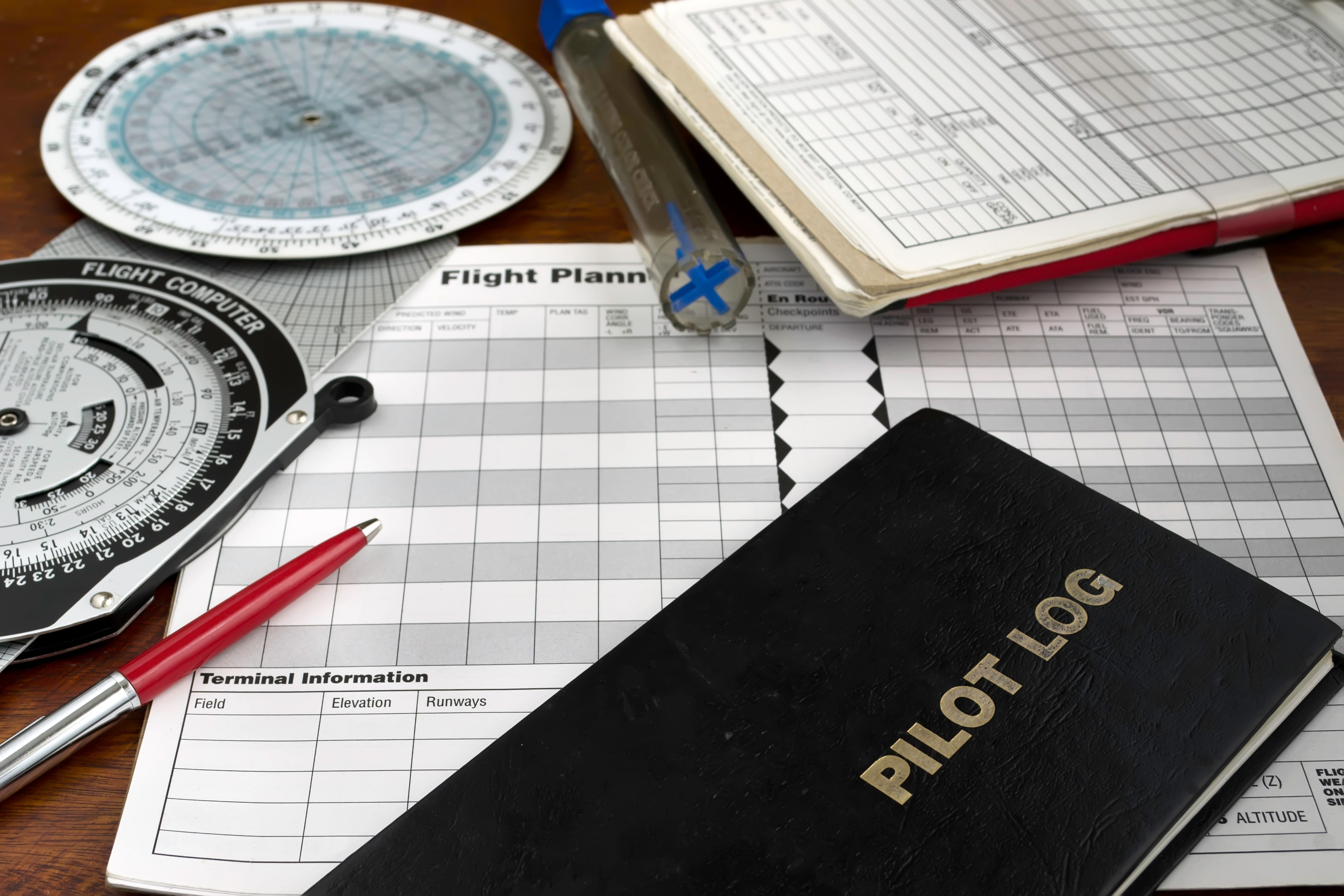
Since the early days, pilots kept their flight records on a paper logbook. What started as a tradition soon became a regulatory requirement. While it is still requirement to log your flights, almost all CAAs and airlines now accept electronic logbooks as the new norm. Those which don’t, allow the electronic logbooks to be presented in the printed form.
The operational environment for professional pilots has evolved dramatically: complex duty schemes, regulatory scrutiny, digital reporting, and data-driven career management are now the norm.
An electronic logbook is no longer a convenience—it is a professional tool. Below are ten practical, career‑relevant reasons why modern pilots should transition to digital logging.
1. Data Security and Backups
No single point of failure
Cloud and local backups protect against loss, theft, or damage. On the other hand, paper logbook doesn’t offer any such protections.
2. Accuracy and Error Reduction
Eliminate arithmetic mistakes
Automatic time summation prevents common errors in block, flight, night and other function time totals.
Consistent rule application
Configured rules ensure landings, PIC/SIC, and special times are always calculated the same way. Electronic logbooks, like Logger, guide you to correctly log your times.
3. Flexibility and Statistics
Regulatory compliance
Electronic logbooks offer great flexibility. You can display your totals for any select period, break down the times by type or any other metric you choose. You can even combine the rules together.
Statistics
Use interactive or custom statistics to display totals that matter to you. Custom filters allow you to track prety much any data you might need.
4. Audit‑Ready Records
Proof during inspections
Quickly demonstrate currency, recency, and experience during audits or line checks.
Built in Audit
Logger specifically, has built in Flight Audit feature which allows you to scan all your flights for common logging mistakes. Remember the time where the times were not adding up on the paper logbook? With Logger can find this mistake with ease.
5. Advanced Search and Filtering
Find any flight in seconds
Search by date, route, aircraft, crew member, or remarks.
Scenario preparation
Instantly retrieve past approaches, diversions, or special events for training or interviews. This can be done by using flight tags.
6. Career and Upgrade Planning
Milestone visibility
Track progress toward command upgrades, type, or instructor ratings. With Logger you can set goals, use factors (if desired) and view your progress.
Evidence‑based decisions
Base career moves on precise data rather than estimates. With Logger you can track your earnings or flight costs.
7. Seamless Import from Airline Systems
Roster imports
Automatically create logbook entries from roster systems. Logger currently supports over 150 airlines with more being continuously added.
ACARS and ADS-B integration
Some electronic logbooks, Logger included, allow you to import flights through ACARS or ADS-B. This allows you to not only store your times, but also your flight replay.
8. Reports for Employers and Authorities
Professional output
Print your flight log into any supported regulatory compliant layout in the matter of seconds. Generate CV summaries for airlines or print your experience directly on the FAA 8710 form.
Custom reporting
Tailor reports for airlines, training organizations, or licensing authorities with custom print layout.
9. FTL Tracking
Limitation Tracking
Track your flight time and currency limitations. Get notified when you are approaching the limits.
Radiation Tracking
Keep your independent record of radiation exposure.
10. Long‑Term Scalability
Entire career in one system
From first solo to final line flight—no volume limits, no extra binders.
Future‑proofing
Your data remains searchable, exportable, and analyzable for decades. If you choose to migrate, you can do so at any time using CSV export. The same cannot be said to thousands of flights logged on paper.
Final Thoughts
Paper logbooks will always have sentimental value. But professionalism in modern aviation is increasingly defined by precision, traceability, and efficiency. An electronic logbook aligns with how airlines, authorities, and training organizations already operate: digitally, data‑driven, and audit‑ready.
For the professional pilot, digital logging is not about abandoning tradition. It is about applying modern tools to safeguard your experience, your compliance, and ultimately your career.

